Let’s be honest, leg day has a reputation.
It’s the workout that makes you question your life choices as you hobble down the stairs the next day. It’s the session you might be tempted to skip when your upper body routine feels so much easier (and let’s face it, more Instagram-worthy).
But here’s the truth: leg day is absolutely essential if you want to build real, functional strength.
Whether you’re just starting your fitness journey or you’ve been hitting the gym for years, understanding how to structure an effective leg day can transform not just your legs, but your entire physique and performance.
Why Leg Day Actually Matters (Even If You Dread It)

I know, I know, nobody wakes up excited about squats. But stick with me here.
Your legs are your foundation. Think about it: every time you walk, run, jump, climb stairs, or even just stand up from your desk, you’re using your leg muscles. When these muscles are strong, everything else in life gets easier.
Beyond the practical benefits, leg training offers some serious fitness advantages:
It torches calories like nothing else. Because your lower body contains the largest muscle groups in your body, leg workouts demand massive amounts of energy. This means you’re burning more calories during your workout and boosting your metabolism for hours afterward.
It prevents injuries. Strong legs mean stable knees, protected ankles, and a supported lower back. When you strengthen the muscles around these joints, you’re essentially building your body’s own injury-prevention system.
It improves your overall strength. You can’t build a strong house on a weak foundation, right? The same principle applies to your body. Weak legs will eventually limit your progress in every other area of your training.
The Muscles You’re Actually Working
When you train legs, you’re not just working one or two muscles—you’re engaging an entire network of powerful muscle groups:
Quadriceps – These are the big muscles on the front of your thighs. They’re responsible for extending your knee, which means they’re involved in everything from squats to simply standing up.
Hamstrings – Located on the back of your thighs, these muscles work opposite to your quads. They help you bend your knees and extend your hips, playing a crucial role in explosive movements like sprinting and jumping.
Glutes – Your glutes aren’t just for aesthetics (though that’s a nice bonus). These powerhouse muscles provide stability, generate force, and protect your lower back during almost every lower-body movement.
Calves – Often overlooked, your calf muscles support ankle movement and help with balance and stability. They’re working constantly throughout the day, especially if you do any running or jumping.
The key to a great leg workout? Training all of these muscles in balance. Neglect one group, and you’re setting yourself up for imbalances and potential injuries down the road.
The Best Exercises for Leg Day Workouts

Now let’s get into the meat of what actually works. An effective leg day combines two types of movements: compound exercises and isolation exercises.
Compound Exercises (Your Foundation)
These multi-joint movements should be the backbone of your leg day because they work multiple muscle groups simultaneously and allow you to lift heavier weights.
Squats – The king of leg exercises. Whether you’re doing bodyweight squats, goblet squats, or barbell back squats, this movement targets your quads, glutes, hamstrings, and core all at once. There’s a reason every serious training program includes some variation of the squat.
Deadlifts – Particularly Romanian deadlifts or conventional deadlifts. These strengthen your hamstrings, glutes, and lower back while teaching your body to move as one powerful unit. The hip hinge pattern you learn from deadlifts carries over to countless real-world movements.
Lunges – These unilateral (single-leg) movements are incredible for improving balance, coordination, and fixing strength imbalances between your legs. Plus, they challenge your stability in ways that bilateral exercises simply can’t.
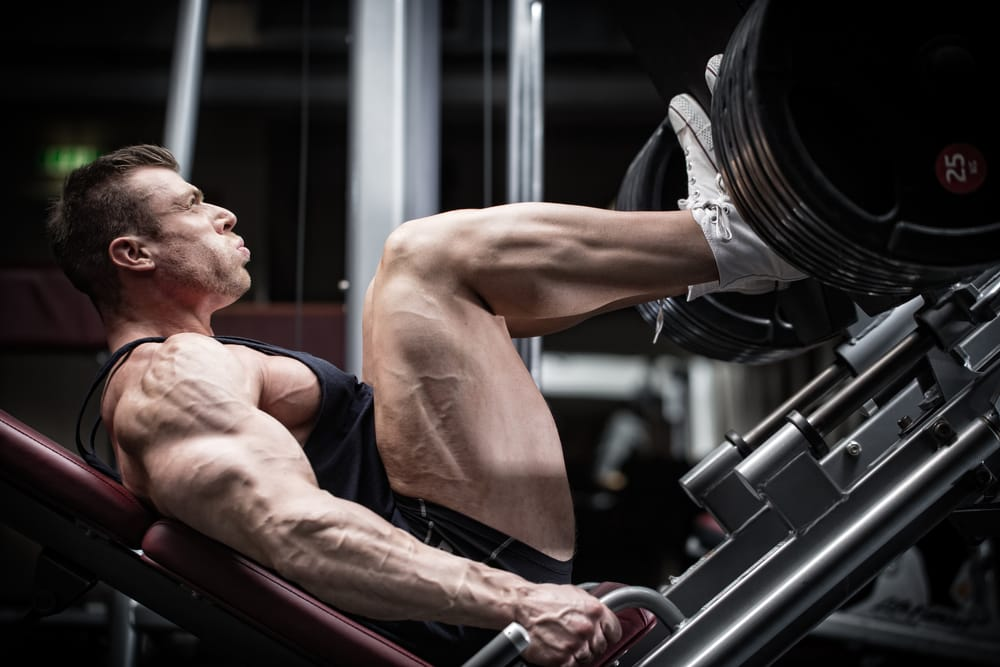
Leg Press – While nothing beats free weights for functional strength, the leg press allows you to safely load heavy weight on your legs without stressing your lower back as much as squats might.
Isolation Exercises (The Finishing Touches)
After you’ve crushed your compound movements, isolation exercises help you target specific muscles that might need extra attention.
Leg Extensions – These zero in on your quadriceps, helping you build that teardrop shape in your thighs while also strengthening the muscles around your knees.
Hamstring Curls – Direct hamstring work is essential for balanced leg development and knee health. Don’t skip these just because you did deadlifts.
Calf Raises – Standing or seated, calf raises strengthen these often-stubborn muscles and improve ankle stability. Your calves might be small, but they’re mighty important.
Sample Leg Day Workout Routines
Ready to put this into practice? Here are two complete workouts based on your experience level.
Beginner Leg Day Workout
If you’re new to leg training, start here. Focus on learning proper form before worrying about heavy weights.
- Bodyweight Squats – 3 sets of 12 reps
- Walking Lunges – 3 sets of 10 reps per leg
- Leg Press – 3 sets of 10 reps
- Standing Calf Raises – 3 sets of 15 reps
Rest 60-90 seconds between sets and really focus on feeling the muscles work.
Intermediate to Advanced Leg Day Workout
Once you’ve mastered the basics and built a solid strength foundation, try this more challenging routine:
- Barbell Squats – 4 sets of 6–8 reps
- Romanian Deadlifts – 3 sets of 8–10 reps
- Bulgarian Split Squats – 3 sets of 8 reps per leg
- Hamstring Curls – 3 sets of 12 reps
- Seated Calf Raises – 4 sets of 15 reps
Rest 2-3 minutes between sets of the heavy compound movements, and 60-90 seconds for isolation exercises.
How Often Should You Train Legs?
This is probably the most common question I get about leg training.
For most people, training legs once or twice per week is the sweet spot. If you’re a beginner, once per week might be plenty while your body adapts to the new stimulus. More advanced lifters often benefit from splitting their leg training into two sessions—maybe one focused on quads and another on hamstrings and glutes.
Recovery is non-negotiable. Your legs contain massive muscle groups that need adequate time to repair and grow. Make sure you’re getting enough sleep (7-9 hours), staying hydrated, and eating enough protein to support muscle recovery.
Common Mistakes That Are Killing Your Progress
Let’s talk about what NOT to do:
Skipping leg day entirely – This is the classic mistake. Yes, upper body training is fun, but creating muscle imbalances between your upper and lower body is a recipe for injury and limited overall progress.
Sacrificing form for weight – Especially with squats and deadlifts, poor form doesn’t just reduce the effectiveness of the exercise—it dramatically increases your injury risk. Leave your ego at the door and prioritize proper technique.
Not recovering enough – Overtraining your legs without giving them time to recover will stall your progress and leave you feeling perpetually sore and exhausted.
Final Thoughts on Leg Day Workouts
Look, I’m not going to lie and tell you that leg day is easy or that you’ll love every second of it.
But I will tell you this: consistently training your legs with proper exercise selection, balanced volume, and adequate recovery will build strength and confidence that extends far beyond the gym.
Your future self—the one climbing stairs without getting winded, playing with your kids without back pain, and moving through life with power and stability—will thank you for not skipping leg day.
So next time you’re tempted to turn leg day into “arm day part two,” remember why you started. Your legs carry you through life. They deserve the work. Learn about how often you should go, and get and amazing upper body split, as well as an active recovery plan!